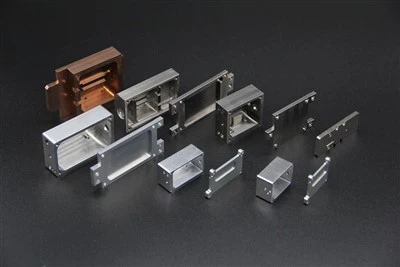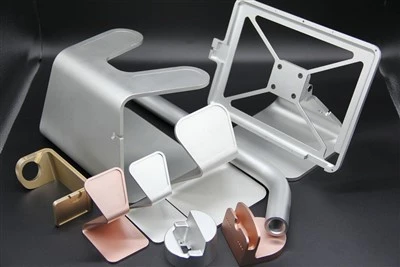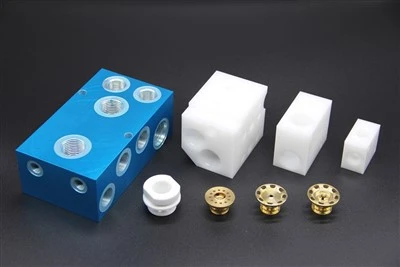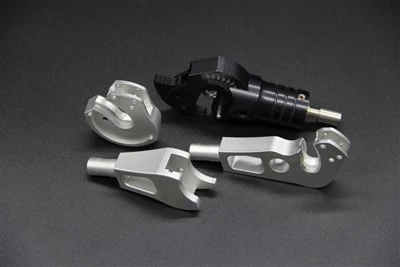
A batch of aluminum brackets arrives for vehicle trial assembly. The mounting holes do not line up with the chassis points, thin walls show visible distortion, or the surface carries tool marks that fail the appearance check. The whole lot goes back for rework, and the trial schedule slips. In most cases the machine itself is not the problem. The real issue is that the machining requirements for Automotive Aluminum Bracket CNC Machining were never clearly defined at the start. This article explains the key requirements-material selection, tolerances, warping control, surface treatment, inspection, and how to choose a reliable supplier-so you can avoid these costly surprises.
Why Automotive Aluminum Brackets Are Harder to Machine Than They Look
At first glance a bracket looks simple: a few holes, a few faces, maybe some lightening pockets. In reality it must deliver weight reduction, structural strength, precise assembly fit, and reasonable cost at the same time. Aluminum's lower density helps lighten the vehicle, but its softness and residual stress make it sensitive to clamping force and cutting loads.
Automotive aluminum content continues to rise. European cars, for example, increased from an average of 174 kg of aluminum in 2019 to 205 kg in 2022, with projections reaching around 237 kg per vehicle by 2026. Brackets, mounts, and support structures form a growing share of that volume. Meeting the functional needs of these parts through proper Automotive Aluminum Bracket CNC Machining requires more than simply programming a tool path.
Choosing the Right Aluminum Alloy
Not every aluminum grade behaves the same under the cutter or in service. The table below compares the four alloys most often specified for automotive brackets.
|
Alloy |
Strength Level |
Machinability |
Corrosion Resistance |
Typical Use Case |
Relative Cost |
|
6061-T6 |
Medium-high |
Excellent |
Good |
General brackets, mounts, prototypes |
Low |
|
6082-T6 |
Slightly higher than 6061 |
Very good |
Excellent |
Structural brackets, outdoor exposure |
Low-medium |
|
7075-T6 |
High |
Good |
Moderate |
High-load or motorsport brackets |
High |
|
5052 |
Lower |
Good |
Excellent |
Formed or corrosion-critical brackets |
Low |
6061 Aluminum Bracket CNC Milling remains the most common choice because it offers the best overall balance of strength, machinability, weldability, and cost. It machines cleanly, takes a good surface finish, and is widely available in plate and bar. Many shops that specialize in Custom Aluminum CNC Milling Parts default to 6061-T6 for this reason.
Strength vs. Weight vs. Cost
Need maximum strength in a compact package → consider 7075, accepting higher material and machining cost.
Need good corrosion resistance and outdoor durability → 6082 or 5052 often work better.
Need the lowest total cost with solid everyday performance → 6061-T6 is usually the practical winner for most Automotive Aluminum Bracket CNC Machining projects.
Tolerance and Accuracy Requirements
Not every dimension on a bracket needs the same precision. Over-tolerancing raises cost without improving function.
Critical features that typically need tighter control:
Mounting-hole positions and diameters (often ±0.05 mm or tighter when they locate to other components)
Flatness of mating faces (commonly 0.05–0.1 mm depending on sealing or alignment needs)
Perpendicularity between key faces and hole axes
General dimensions that do not affect assembly (ISO 2768-m medium class is frequently acceptable)
ISO 2768 provides a useful default for unspecified dimensions. For many non-critical lengths and widths, the medium class (m) keeps cost reasonable while still delivering functional parts. Only the features that truly affect fit or load path should carry tighter individual tolerances in Automotive Aluminum Bracket CNC Machining.
Preventing Warping and Vibration in Thin-Wall Parts
Aluminum brackets often have thin walls and open sections. Clamping force or aggressive cutting can easily push the material out of shape. Anyone who has machined thin aluminum knows how quickly a part can move if the setup is not right.
Fixture design
Use soft jaws, vacuum plates, or dedicated fixtures that locate on already-machined datums. Avoid over-clamping. Support thin sections from underneath whenever possible.
Cutting strategy
Separate roughing, semi-finishing, and finishing. Leave enough stock after roughing so that residual stress can relax before the final cut. Use sharp tools, moderate feeds, and adequate coolant to keep heat low. This approach is especially important in 6061 Aluminum Bracket CNC Milling, where residual stress can be noticeable.
Stress relief
For critical or highly distorted parts, a stress-relief cycle after rough machining is often worthwhile. It adds a process step but prevents dimensional drift later.
Practical summary:
Support the part properly rather than gripping it tightly
Balance material removal across the part
Finish critical surfaces last, after most stress has been released
Monitor tool wear so cutting forces stay consistent
Surface Finish and Post-Processing
Common surface treatments for automotive aluminum brackets include:
Clear or colored anodizing (improves corrosion resistance and appearance)
Sand blasting or bead blasting (uniform matte look)
Electrophoretic coating (good edge coverage and corrosion protection)
Simple oil preservation for internal or non-visible parts
Most coatings add thickness. Leave appropriate stock allowance on critical dimensions and discuss the final surface requirement early when ordering Custom Aluminum CNC Milling Parts. Clear communication on finish expectations helps avoid surprises after anodizing or coating.
Inspection and Quality Control
A reliable process includes:
First-article inspection with full dimensional report (usually CMM)
In-process checks on critical features
Batch sampling according to an agreed AQL or customer control plan
Buyers should request material certificates (mill test reports) and dimensional inspection reports with every shipment. Certifications such as ISO 9001 and IATF 16949 indicate that the supplier maintains documented systems for process control, traceability, and continuous improvement-important when brackets become part of a vehicle assembly.
Case Study – Structural Bracket for Chassis Mounting
A customer needed a series of structural aluminum brackets used for chassis mounting. The parts had thin walls and multiple mounting holes that had to keep accurate position after machining. Early trials showed minor warping that shifted hole locations and caused fit problems on the vehicle.
The machining team switched to low-stress fixturing, staged the roughing and finishing cuts more carefully, and controlled cutting parameters to limit heat and force. Critical hole positions and flatness were checked on a CMM before parts were released. Once the fixture and tool-path strategy were locked in, the brackets met the required assembly fit without secondary straightening, and consistency improved across subsequent batches.
How to Choose an Aluminum Bracket CNC Machining Manufacturer
When evaluating suppliers, check these five points:
Equipment – modern 3-, 4-, or 5-axis mills capable of holding the required tolerances on aluminum
Material traceability – ability to supply mill certificates and heat-lot tracking
Inspection capability – in-house CMM or equivalent metrology
Prototyping speed – ability to deliver functional samples quickly
Communication – clear DFM feedback and responsive project support
An experienced Aluminum Bracket CNC Machining Manufacturer will usually provide practical suggestions on material, tolerance, and process. Many buyers also look for a CNC machined aluminum brackets factory that can handle both prototypes and series production, or a wholesale aluminum CNC bracket supplier when volumes grow. A good custom automotive bracket manufacturer will also offer broader aluminum CNC milling services for auto parts, making it easier to manage related components under one roof.
Industry Context
Automotive aluminum demand continues to grow as manufacturers pursue lighter vehicles and longer EV range. Average aluminum content per vehicle is projected to keep rising through the rest of the decade. Suppliers that invest in process control, material knowledge, and consistent quality systems are better positioned to meet the tightening requirements for structural and mounting components produced by Automotive Aluminum Bracket CNC Machining.
FAQ
Q: What tolerance can CNC milling achieve on aluminum brackets?
A: Critical mounting holes and flatness can routinely be held to ±0.05 mm or better on modern equipment. Non-critical dimensions often follow ISO 2768-m medium tolerances to control cost.
Q: Which aluminum alloy is best for automotive brackets?
A: 6061-T6 is the most widely used because of its balanced strength, excellent machinability, and cost. 6082 is a close alternative when slightly higher strength or better corrosion resistance is needed; 7075 is reserved for high-load applications. This is why 6061 Aluminum Bracket CNC Milling remains the default choice for many projects.
Q: How do you prevent thin-wall aluminum brackets from warping?
A: Use low-stress fixtures, staged roughing and finishing, sharp tools, and controlled cutting forces. Stress relief after rough machining helps on critical parts.
Q: What surface finish is best for automotive aluminum brackets?
A: Anodizing is common for corrosion protection and appearance. Sand blasting or electrophoretic coating are alternatives depending on cosmetic and environmental requirements. Always allow for coating thickness on critical dimensions when specifying Custom Aluminum CNC Milling Parts.
Q: What is the typical MOQ and lead time when ordering from a CNC factory?
A: Many shops accept prototype quantities as low as one piece. Production minimums depend mainly on fixture investment. Prototype lead times are often 7–15 working days after drawing approval; series production lead times vary with volume and capacity.
Clear requirements for material, tolerance, fixturing, surface treatment, and inspection turn Automotive Aluminum Bracket CNC Machining from a source of assembly problems into a predictable, high-quality process. Define these points early, share complete drawings, and work with a supplier that understands both aluminum behavior and automotive expectations.