
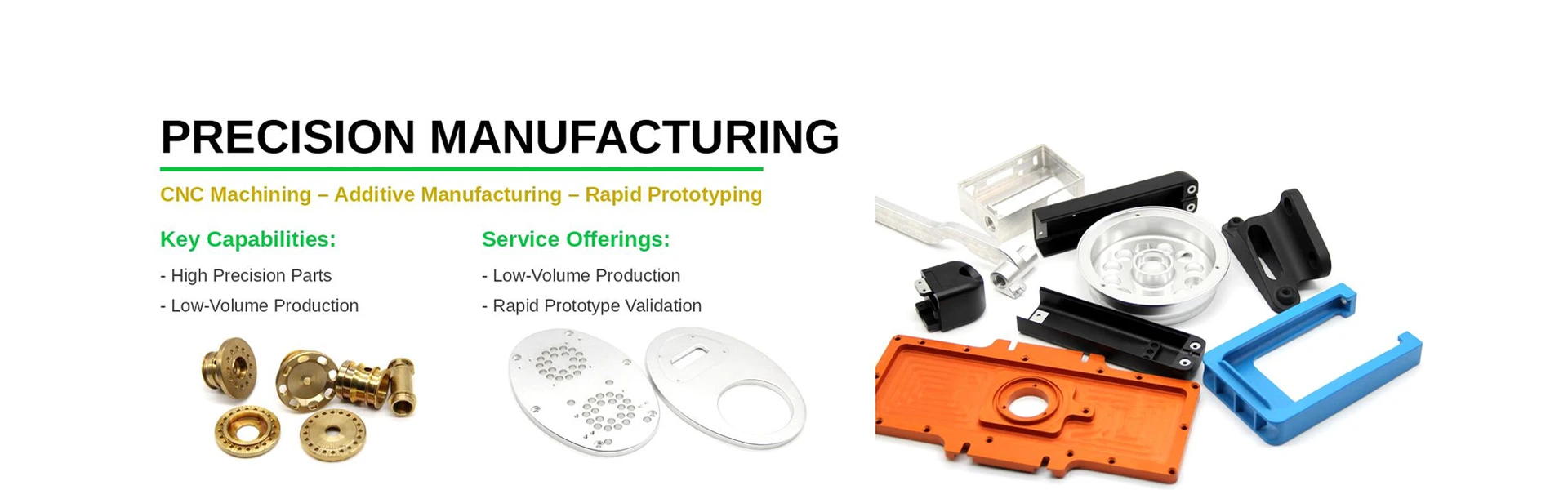
Choose metal 3D printing when the housing has complex internal geometry, needs significant weight or part-count reduction, or when annual volume is low to medium. Choose CNC machining when the shape is relatively simple, volumes are high, or you need the absolute tightest tolerances on every surface. Many projects now use a hybrid route: print the complex body, then CNC only the critical interfaces. This article breaks down cost, lead time, design freedom and volume thresholds so you can decide faster.
Metal 3D printed housings and CNC-machined housings are not direct substitutes. Each process has clear strengths. Understanding where those strengths sit-and where they overlap-prevents both over-engineering and under-performing designs.
Quick Comparison Table
| Factor | Metal 3D Printing | CNC Machining | Winner by Scenario |
|---|---|---|---|
| Design complexity | Excellent (internal channels, free-form) | Limited by tool access | 3D printing |
| Part consolidation | High (one-piece replaces multi-part assemblies) | Low | 3D printing |
| As-printed / as-machined accuracy | ±0.1–0.2 mm typical | ±0.02–0.05 mm routine | CNC |
| Surface finish (as-processed) | 6–15 µm Ra | 0.8–3.2 µm Ra easily achievable | CNC |
| Lead time (prototype) | Days to 2 weeks | Days to 3–4 weeks (depending on complexity) | 3D printing (complex) / CNC (simple) |
| Unit cost at low volume (1–50) | Competitive to advantageous | Often higher due to programming & fixturing | 3D printing |
| Unit cost at high volume (500+) | Usually higher | Lower once programming is amortized | CNC |
| Material waste | Low | High (especially for deep cavities) | 3D printing |
| Best volume range | 1–300–500 pcs | 100+ and especially 500+ | Depends |
Where Metal 3D Printing Wins
Metal 3D printing pulls ahead whenever geometry or system-level requirements favor consolidation and design freedom.
Complex internal cavities, conformal cooling or fluid channels, integrated heat-sink surfaces and shielding walls can be produced in a single build. The same part can include mounting bosses, cable passages and topology-optimized ribs without additional setups. Weight reduction of 20–40 % relative to a multi-piece CNC assembly is common once the design is allowed to take advantage of additive capabilities. Lead time for functional prototypes is often shorter because there is no need to program multiple operations or wait for fixtures.
These advantages are most pronounced in RF filter housings, sensor packages, drone and EV electronics enclosures, and any application where thermal management and packaging density matter. In low-volume metal housing production the absence of dedicated tooling also removes a major cost and time barrier.
Where CNC Machining Wins
CNC machining remains the better choice for several clear situations:
The housing is essentially a prismatic box or a set of orthogonal features that can be cut efficiently from plate or billet.
Annual volumes are high enough that programming and fixturing costs are spread over hundreds or thousands of parts.
Every surface, or most surfaces, must hold tight tolerances and fine surface finishes.
Material certification or process validation requirements favor well-established subtractive routes.
When the design is simple, a skilled CNC shop can often deliver both prototype and production parts faster and at lower cost than additive manufacturing. Deep pockets and internal features that would require five-axis work or EDM still favor CNC if volumes justify the programming effort.
Cost Breakdown: What Drives the Price of a Metal 3D Printed Housing
The price of a metal 3D-printed housing is driven by four main factors:
Material volume and alloy – AlSi10Mg is the most economical; titanium and nickel alloys raise both powder cost and machine time.
Build height and nesting – Taller parts consume more machine time. Efficient nesting of multiple parts on the same build plate lowers unit cost.
Support structure and post-processing – Heavy supports increase both print time and manual removal labor. CNC machining of critical faces, heat treatment, surface finishing and inspection add further cost.
Quantity – The first part carries the full DfAM review, parameter development and first-article inspection. Subsequent identical parts benefit from amortized setup.
In practice, small-to-medium aluminum housings in prototype quantities frequently land in the low-to-mid hundreds of dollars per piece. Larger or more complex parts, or those requiring extensive CNC finishing, move into the high hundreds or low thousands. At volumes of several hundred pieces the unit price declines, but the rate of decline is usually slower than with pure CNC because machine time remains the dominant cost.
CNC cost, by contrast, is dominated by programming, fixturing and machine time. Simple parts drop quickly in price with volume; complex multi-sided parts remain expensive even at moderate quantities because each operation adds setup.
Hybrid Approach: Print Then CNC Critical Surfaces
The highest-performing and often most economical route for many metal housings is hybrid. The complex free-form body, internal channels and non-critical surfaces are printed. Sealing faces, connector interfaces, board mounts and precision datums are left with machining stock and finished by CNC after heat treatment.
This approach captures the design-freedom and part-consolidation benefits of additive manufacturing while delivering the accuracy and surface finish that assemblies actually require. It also shortens total lead time compared with a fully CNC multi-piece assembly and avoids the tolerance stack-up that comes with welding or bonding separate components. Most production metal 3D-printed housings we deliver follow this hybrid workflow.
Decision Guide by Volume
1–10 pieces (prototypes and early validation)
Metal 3D printing is usually faster and more economical for any geometry that is not completely trivial. Changes can be made in CAD and a new part printed without new fixtures or programs.
10–500 pieces (low-volume production / bridge quantities)
This is the strongest range for metal 3D printing and hybrid production. Part consolidation, weight reduction and the absence of tooling continue to favor additive or hybrid routes. CNC becomes competitive only if the geometry is simple and programming can be heavily amortized.
500+ pieces
Pure CNC or conventional manufacturing (casting + machining) typically takes the lead on unit cost unless the design retains significant complexity or weight targets that only additive can meet. At these volumes a serious cost model comparing hybrid additive versus multi-piece CNC or cast-and-machined solutions is essential.
Case Study: RF Filter Housing
A communication-equipment customer originally produced a five-piece aluminum housing by CNC machining and welding. The assembly required multiple setups, welding, post-weld machining and extensive inspection. Lead time averaged eight weeks and the finished part was heavier than the system designers wanted.
The redesigned single-piece AlSi10Mg housing was printed, stress-relieved, and CNC-finished only on the waveguide interfaces and mounting faces. Results:
Part count reduced from 5 to 1
Mass reduced by 28 %
First validated batch delivered in 12 days
Leak and dimensional performance met specification without additional sealing operations beyond the original gasket design
Subsequent production batches retained the same process parameters and inspection plan. The hybrid route proved both faster and lower in total cost at the volumes required.
FAQ
Q: Is metal 3D printing always more expensive than CNC for housings?
A: No. At low volumes and with complex geometry, metal 3D printing is frequently less expensive once programming, fixturing and assembly costs of the CNC route are included. At high volumes and simple geometry, CNC is almost always cheaper.
Q: How much can I reduce lead time by switching to metal 3D printing?
A: For complex housings the reduction is often 50 % or more on the first articles. Simple prismatic housings may show little or no improvement.
Q: Can a metal 3D-printed housing meet the same tolerances as a fully CNC-machined part?
A: Critical features can. Non-critical free-form surfaces are left at as-printed accuracy (±0.1–0.2 mm). The hybrid workflow is specifically designed to deliver CNC-level accuracy where the assembly needs it.
Q: What is the practical upper volume limit for metal 3D-printed housings?
A: Most programs stay economical below a few hundred pieces. Above that threshold a detailed cost comparison with CNC or casting is required. Some highly complex or weight-critical designs remain additive even at higher volumes.