

Why Supplier Selection Matters in Aerospace
The failure modes are familiar to anyone who has lived through a bad lot:
Material certificates that cannot be tied to the bar or plate actually used.
First articles that pass, then production parts that slowly walk away from the process window because fixtures and tools were never locked.
FAI packages that look complete until an auditor asks for a missing balloon or a special-process record.
DFM questions that sit unanswered until metal is already on the machine.
Any one of these costs more than a modest difference in unit price. The right supplier prevents them; the wrong one discovers them with you.
The 10-Point Checklist
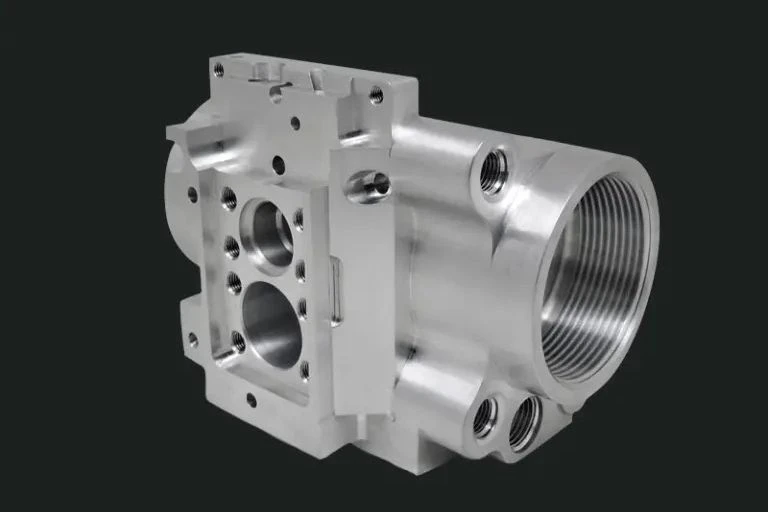
1. Quality system and certification status
If the program needs an AS9100 certified machine shop, ask for the current certificate, scope, and issuing body - not a slide that says "AS9100 aligned." NADCAP covers specific special processes, not general milling. Confirm which processes, if any, are accredited and whether they run in-house or through controlled partners. Vague answers here are information, not noise.
2. Multi-axis capacity that matches the geometry
Complex parts often need 4-axis or 5-axis work to protect positional relationships and cut risky setups. Confirm work envelope and whether multi-face or contoured aerospace parts are routine. A shop that rarely leaves 3-axis will struggle on geometry that truly needs simultaneous or positional five-axis work.
3. Material traceability
Certificates must travel with the lot. How does the shop track material from receiving through finished parts? Do they regularly buy to AMS, ASTM, or other specs named on the drawing? "We can get certs" is weaker than a clear lot-control practice you can inspect.
4. CMM inspection and FAI discipline
AS9102 first-article inspection should be familiar work when the order requires it. Ask what a typical package includes and how GD&T callouts are verified. On-site CMM capability shortens the loop; full dependence on outside labs for every check slows reaction when something drifts.
5. Special-process management
Anodizing, conversion coating, passivation, and heat treatment often sit on the critical path. Which steps are in-house? Which go out? How are partners approved and recorded? Unclear special-process chains are a frequent source of both delay and documentation gaps.
6. DFM support before the order
Send a real drawing package before you commit. Feature-level notes on thin walls, stacked tolerances, or finishing conflicts are useful. Generic assurances are not. Response speed and specificity here predict how the relationship will feel under schedule pressure.
7. Proof of tolerance capability
Blanket claims such as "we hold ±0.01 mm on everything" are not evidence. Ask for sample CMM data or first-article examples on parts similar in material and feature type to yours. Capability is feature- and material-dependent; treat it that way.
8. Lead time and capacity realism
Aluminum prototypes and titanium or nickel-alloy lots with full FAI do not share the same clock. Ask for typical windows by material family and documentation level. One number for every job usually means the schedule has not been thought through.
9. IP protection and NDA practice
Aerospace drawings are sensitive. NDA before detailed review, controlled file access, and clear rules on who sees the model are baseline. Casual handling of files is a red flag even when the machining pitch sounds strong.
10. Export, compliance, and day-to-day communication
International programs need plain answers on shipping, documentation, and any regulatory constraints that apply. Equally important: can you reach engineering and quality, or only sales? Slow, purely commercial communication is a leading indicator of pain later.
Evaluate an aerospace CNC parts supplier China - or a supplier in any other region - against the same ten points. Geography does not replace traceability, inspection discipline, or documentation control.
Red Flags to Avoid
Dig deeper or walk away when you see:
No sample FAI structure or CMM examples on similar work
Material certificates missing, or not tied to the actual lot
Quotes far below market with no process explanation (missing steps are a common reason)
AS9100 claimed without a current certificate or with an unclear scope
No substantive DFM feedback on a complex package
Special processes described only as "we handle it"
Pressure to skip NDA or to start on incomplete definitions
In practice, the lowest number on the page is often the highest risk when these gaps appear together.
What to Include in Your Aerospace Machining RFQ
A complete aerospace machining RFQ reduces assumption and improves quote quality:
STEP models and 2D drawings with revision
Material grade, specification, and temper/condition
Quantity, including prototype and production breaks if known
Critical tolerances and GD&T notes
Surface finish and special-process requirements
Inspection and documentation needs (FAI, CMM, certificates)
Target schedule and program constraints
NDA status when drawings are sensitive
Clear inputs produce comparable quotes. Incomplete inputs produce optimistic numbers that unravel later.
Cost Factors in Aerospace CNC Milling
Material - Titanium and nickel alloys cost more per kilogram and cut more slowly than aluminum.
Machine time - Cycle time follows geometry, removal rates, and number of setups. Five-axis can reduce setups; total cost depends on the net result, not the hourly rate alone.
Tolerance and inspection - Tight geometric control and full FAI increase programming, fixturing, and metrology time.
Special processes - Finishing and treatment steps add cost and calendar time, especially when outside processors are involved.
Quantity - Prototypes carry the full setup and documentation burden. Locked processes spread some of that cost across repeating lots.
A credible quote makes these drivers visible. An unexplained low number often means something was left out.
FAQ
Q: How do you verify an AS9100 certificate?
A: Request the current certificate, check scope and dates, and confirm the issuing body. Use the certification body's public resources when needed. "Aligned with AS9100" is not the same as certified.
Q: What separates an aerospace-capable supplier from a general machine shop?
A: Routine management of material traceability, FAI, GD&T verification, and special-process control - not only dimensional machining. Many shops cut metal well; fewer document and lock the process the way aerospace programs require.
Q: Should every part run 5-axis?
A: No. Use it when geometry needs it to protect relationships or avoid risky setups. Many prismatic parts are efficiently made on 3-axis equipment. Match the process to the part.
Q: What slows titanium and Inconel jobs most?
A: Lower material-removal rates, higher tool wear, and stricter heat and chip control. Full FAI and complex finishing add more time. That is normal for those alloys when the process is honest.
Choosing an aerospace CNC machining manufacturer is a structured evaluation: certification status, equipment fit, traceability, inspection discipline, special-process control, DFM quality, proven tolerance capability, schedule realism, IP protection, and clear communication. The ten checks above separate suppliers who can support aerospace work from those who only quote it.
If you are preparing an aerospace machining RFQ or comparing shops for structural, titanium, or high-temperature alloy components, run every candidate against the list. For a specific package, share drawings, material specifications, quantities, and documentation requirements for a formal review through our aerospace CNC milling services team. Clear inputs get you feasibility notes, a process approach, and a lead time you can plan around - before the order is placed.