
Why Supplier Choice Matters
Three factors decide most outcomes:
Tolerance - Locating features and sealing faces have to hold size and position so assemblies fit and process results stay stable.
Cleanliness - Uncontrolled surfaces or residual films can generate particles that affect yield.
Consistency - Pilot parts that work are useless if the next lot drifts. Lot-to-lot stability keeps production predictable.
A solid semiconductor CNC machining supplier treats these three as one system. A weaker supplier treats them as separate checkboxes.
7 Checks Before You Place an Order
1. Equipment capability and process range
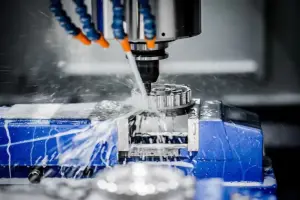
Find out what the shop actually runs: multi-axis capacity, work envelope, and what inspection equipment sits on the floor. For complex geometries, 5-axis work reduces setups and protects relationships between faces. For verification, CMM and surface-roughness measurement matter more than a brochure photo.
Ask whether they regularly machine parts like yours - wafer-handling hardware, vacuum chamber components, gas-distribution plates - or only general precision work. A custom semiconductor equipment parts supplier should describe relevant process experience, not just list machine models.
2. Material certification and traceability
Semiconductor work almost always needs full material traceability. Confirm that certificates travel with the lot and that tracking runs from bar or plate through finished parts.
Clarify which alloys and plastics they machine often (aluminum 6061, 316L stainless, PEEK, PTFE are common) and whether they understand any purity or cleanliness expectations tied to those materials. Traceability is process control, not optional paperwork.
3. Evidence of tolerance and surface capability
Skip verbal promises. Ask for sample inspection reports that show real measured results on critical dimensions and Ra values. First-article data on similar features is more useful than a generic capability claim.
Critical features on many semiconductor components are held in the ±0.005 mm range on suitable geometries, with surface roughness measured rather than left to default conditions. What counts is whether the supplier can show that level of control on parts that look like yours.
4. Clean machining, cleaning, and packaging
Contamination control starts at the machine and continues through cleaning and packaging. Ask how they limit particles during cutting, what cleaning methods they use, and how parts are protected for shipment.
The answer should match the application. "We clean the parts" is not enough. Look for a defined sequence that can be adjusted to the requirement and documented when needed. This is one of the places where problems show up late if the process is vague.
5. Quality system and inspection documentation
A documented quality system (for example ISO 9001) is a baseline. More important is what actually ships with the parts: material certificates, CMM or first-article data, surface-roughness results, and any cleanliness records you specify.
Ask to see the structure of a typical report package. A semiconductor CNC milling parts factory that regularly supplies equipment makers will already have a clear format for this.
6. DFM communication and engineering response
Complex parts often need clarification on tolerances, surface callouts, and manufacturability. Test the supplier before you commit.
Send a drawing and ask for DFM feedback. Note how quickly and how specifically they reply. Do they flag high-risk features? Do they suggest practical adjustments? Slow or vague engineering communication is a reliable early warning.
7. Lead time, MOQ, NDA, and IP protection
Confirm realistic lead times for prototypes and production lots, minimum order quantities, and how NDA and drawing control are handled. Semiconductor designs are sensitive. The supplier should treat drawings and process details as confidential by default and formalize that with an NDA when required.
Clear answers on schedule, quantity flexibility, and IP protection reduce friction once the order is live.
Factory vs Trading Company
Some suppliers cut metal in-house. Others outsource everything. Both can deliver parts, but accountability differs.
Useful signals:
Willingness to discuss specific equipment and inspection methods
Ability to share process photos or video of similar work (under NDA if needed)
Direct access to engineers who understand the machining, not only sales
Consistency between quoted capability and the inspection data they can show
A factory that machines semiconductor CNC milling parts in-house can usually answer process questions in detail. A pure trader often cannot. For critical components, knowing who actually cuts the metal matters.
Project Example
In one equipment program, vacuum-related components arrived with acceptable dimensions but failed particle expectations. Surface condition on several non-critical faces had not been controlled, and cleaning and packaging varied between lots.
The fix locked surface-roughness requirements on the relevant faces, defined a cleaning and packaging sequence matched to the application, and required inspection data with each delivery. Later lots met both dimensional and cleanliness targets. The line stopped losing time to those particular parts. The change was process definition and verification, not a different basic machining method.
Checklist Before You Order
Equipment and inspection capability confirmed for parts like yours
Material certificates and lot traceability available
Sample inspection data showing real tolerances and Ra results
Defined cleaning and packaging approach
Clear quality documentation package
Responsive, specific DFM feedback
Agreed lead time, MOQ, and NDA terms
Use this list when you evaluate any semiconductor CNC milling parts manufacturer. Suppliers who answer with evidence usually deliver with fewer surprises.
FAQ
Q: What should I ask a semiconductor CNC machining supplier first?
A: Ask for relevant experience, sample inspection reports, material traceability practice, and how they handle cleaning and packaging. The quality of the answers tells you more than the price alone.
Q: How important is in-house inspection?
A: Very. On-site CMM and surface-roughness measurement support faster feedback and tighter control. Relying on external labs for every check slows response and can hide variability.
Q: Can one manufacturer support both prototypes and production?
A: Yes. The better ones qualify the process on first articles, then lock fixtures, tools, and inspection plans so pilot and production parts stay consistent.
Q: What files help most when requesting a quote?
A: Drawings or STEP models with critical tolerances and surface callouts, material specification, quantity, target schedule, and any cleanliness or documentation requirements.
Choosing a semiconductor CNC milling parts manufacturer is a process decision. The seven checks above - equipment, traceability, measured capability, cleanliness control, documentation, engineering responsiveness, and commercial terms - separate suppliers who can support semiconductor equipment from those who only machine general precision parts.
If you are sourcing semiconductor CNC milling parts for wafer handling, vacuum systems, or process modules, use the checklist when you compare options. For a specific requirement, share drawings for a DFM review and quotation. Clear feedback on feasibility, inspection scope, and schedule is the fastest way to reduce risk before the order is placed.