
CNC milling stands as one of the most widely used and versatile machining technologies in the entire field of numerical control manufacturing. Built upon the foundation of traditional milling processes, CNC milling integrates the unique advantages of computer numerical control systems, allowing it not only to replicate every function of conventional milling but also to take on complex machining tasks that traditional methods simply cannot achieve. This means that in the manufacturing of parts, CNC milling is able to deliver more refined and diverse machining solutions than ever before.
What sets CNC milling apart from its manual predecessor is the level of precision, repeatability, and process control that computer-driven automation brings to the table. In traditional milling, an operator manually adjusts feed rates, spindle speeds, and tool positioning, which introduces variability from part to part and limits the complexity of geometries that can realistically be produced. CNC milling eliminates much of this human variability by translating a digital design file-typically a CAD model converted into G-code-into precise, programmed tool movements along multiple axes. This programmatic control allows manufacturers to hold tolerances that would be extremely difficult, if not impossible, to achieve consistently by hand, often down to a few thousandths of a millimeter depending on the machine and tooling involved.
Equipment: CNC Milling Machines and Machining Centers
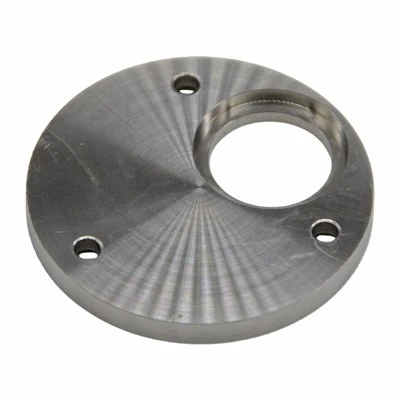
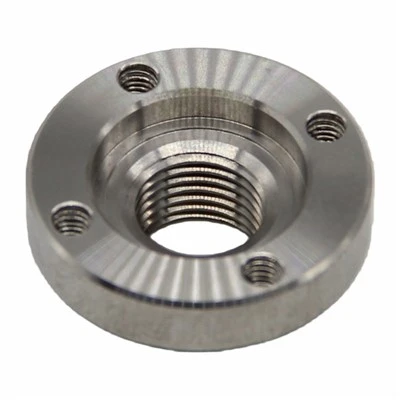
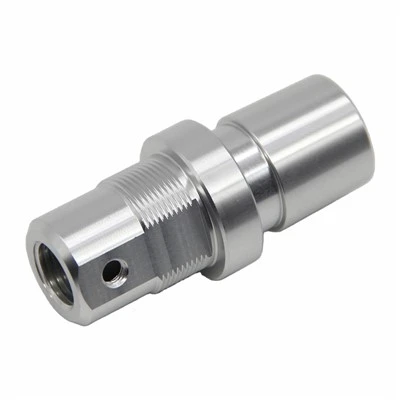
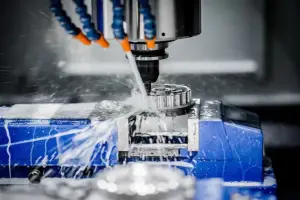
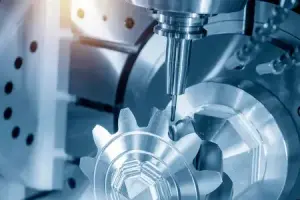
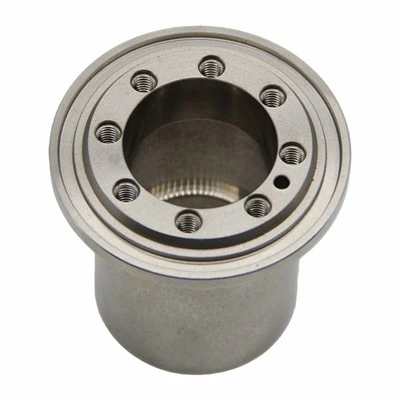
CNC milling equipment mainly includes CNC milling machines and machining centers. These pieces of equipment are capable of performing planar contour milling and surface contour milling on parts, as well as more complex operations such as drilling, reaming, boring, tapping, and thread machining. It is these capabilities that give CNC milling an irreplaceable position in the field of mechanical manufacturing, making it an indispensable technical method for the production of countless precision parts.
Within this category of equipment, there is meaningful variation in capability and complexity. Standard 3-axis CNC milling machines move the cutting tool along the X, Y, and Z axes, making them well suited for relatively straightforward planar and pocketed geometries. More advanced 4-axis and 5-axis machining centers add rotational movement around one or two additional axes, enabling the tool to approach a workpiece from multiple angles without requiring the part to be manually repositioned or re-fixtured. This is particularly valuable for producing complex curved surfaces, undercuts, and intricate geometries in a single setup, which not only improves accuracy by reducing repositioning errors but also significantly shortens production cycles.
Machining centers, in particular, often incorporate automatic tool changers that can hold dozens of different cutting tools, allowing a single machine to move seamlessly between milling, drilling, tapping, and boring operations without manual intervention. This automation of tool changes is one of the key reasons CNC machining centers have become central to high-mix, low-volume production environments where parts change frequently but precision cannot be compromised.
Broad Range of Applications
CNC milling technology has an extremely broad range of applications, comfortably handling everything from simple planar machining to complex three-dimensional surface machining. This flexibility and versatility have made CNC milling an indispensable part of modern manufacturing. As the technology continues to advance, CNC milling itself continues to innovate and evolve, bringing greater possibilities and higher efficiency to the manufacturing industry.
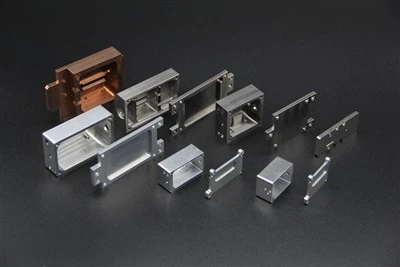
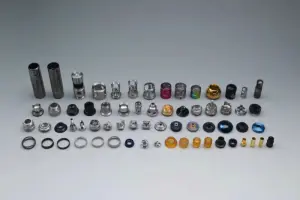
In practice, this versatility translates into a presence across nearly every major manufacturing sector. In the aerospace industry, CNC milling is used to machine structural components, engine parts, and lightweight aluminum or titanium brackets that must meet extremely tight tolerances and rigorous certification standards. In the automotive sector, it is used both for prototyping new components and for producing production-grade parts such as engine blocks, transmission housings, and custom tooling. The medical device industry relies heavily on CNC milling for surgical instruments, orthopedic implants, and precision housings for diagnostic equipment, where biocompatible materials and micron-level tolerances are often required. Even in consumer electronics, CNC milling is used to produce enclosures, heat sinks, and connector components that demand both aesthetic finish and dimensional accuracy.
Materials commonly processed through CNC milling span a wide spectrum as well, including aluminum alloys, stainless steel, titanium, brass, copper, and a range of engineering plastics such as PEEK, POM (Delrin), and nylon. Each material presents its own machining characteristics in terms of cutting speed, tool wear, and surface finish, which is why experienced CNC programmers and machinists tailor feed rates, spindle speeds, and tool coatings to the specific material being processed.
Automation, Precision, and Cost Efficiency
With the development of automation and intelligent technologies, CNC milling has not only improved machining precision and efficiency but has also greatly reduced the need for manual operation, thereby lowering production costs. In addition, CNC milling technology can achieve complex machining paths through programming, making the machining process more precise and reliable.
This shift toward automation extends beyond the machine tool itself. Many modern CNC milling operations are now integrated with computer-aided manufacturing (CAM) software that simulates tool paths before actual cutting begins, allowing engineers to identify potential collisions, inefficient movements, or excessive tool wear before a single chip is cut. This simulation step reduces material waste and protects expensive tooling and fixtures from damage caused by programming errors. Some facilities have gone further by incorporating in-process probing systems, which allow the machine to automatically measure a part mid-cycle and make micro-adjustments to compensate for tool wear or thermal expansion, ensuring that every part produced falls within specification without requiring constant human oversight.
The reduction in manual labor also has downstream effects on production consistency. Because CNC milling machines execute the exact same programmed path on every cycle, part-to-part variation is dramatically reduced compared to manual machining, which in turn reduces scrap rates and rework. For manufacturers producing large batches of precision components, this consistency translates directly into lower per-unit costs and more predictable delivery timelines, both of which are critical considerations for buyers sourcing machined parts on a global scale.
Furthermore, the combination of automation and digital control has made CNC milling increasingly compatible with broader Industry 4.0 initiatives. Networked CNC machines can report real-time production data, tool life status, and machine utilization rates back to centralized monitoring systems, giving manufacturers greater visibility into their production floor and enabling predictive maintenance that prevents unplanned downtime.
Conclusion
Overall, CNC milling technology, with its flexibility, versatility, and high efficiency, has become an important machining method in modern manufacturing. It is not only capable of meeting a wide variety of complex machining requirements but is also able to improve production efficiency and product quality, providing a tremendous driving force for the development of the manufacturing industry.
As global supply chains continue to demand faster turnaround times, tighter tolerances, and greater design complexity, CNC milling is likely to remain at the center of precision manufacturing for the foreseeable future. Ongoing advancements in tooling materials, multi-axis machine architecture, and software-driven process optimization suggest that the capabilities of CNC milling will only continue to expand, further cementing its role as one of the most essential and adaptable machining technologies available to manufacturers today.