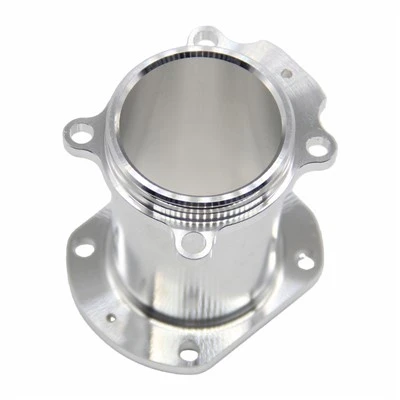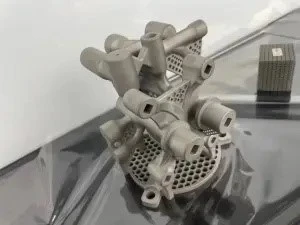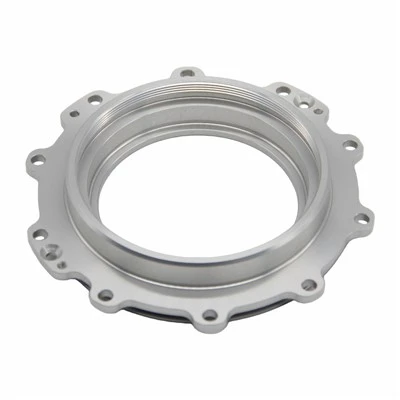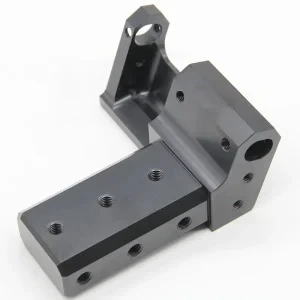

The drawings go out. Three quotes come back with prices that differ by a factor of two. The first samples arrive and the bearing seats are out of round. The rotor scrapes the housing on the first spin-up. Noise, heat, and a delayed program follow.
This is exactly the problem CNC Milling for EV Motor Housing is meant to solve. According to the IEA Global EV Outlook, electric car sales exceeded 20 million units in 2025 and are projected to reach around 23 million in 2026-roughly one in four new cars sold worldwide. Every one of those motors needs a housing that holds the stator and rotor in precise alignment, manages heat, and seals against the environment. This article explains how CNC milling delivers that precision, which materials work best, where the process fits in production, and how to choose a reliable partner.
Why EV Motor Housings Are Harder to Make Than They Look
What the housing actually does
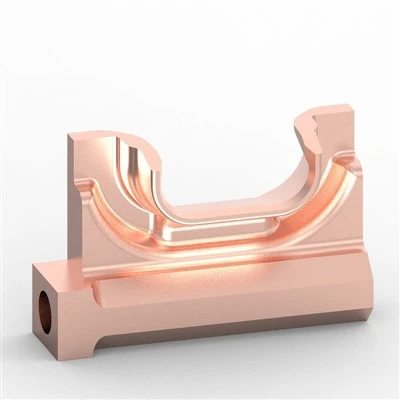
The motor housing is not just a cover. It locates the stator, supports the bearings that carry the rotor, transfers heat away from the windings, and provides sealing surfaces that keep coolant or contaminants out. In many designs it also integrates cooling channels or mounting features for the inverter and gearbox.
Why small errors cause big problems
A few hundredths of a millimeter of concentricity error between the stator bore and the bearing seats can produce imbalance, higher noise and vibration (NVH), extra heat, and premature bearing wear. Flatness or surface-finish problems on sealing faces lead to leaks. Thin-wall distortion during machining can throw the entire geometry out of tolerance. In short, the housing directly affects motor efficiency, durability, and acoustic performance. From the shop floor: if the concentricity is off by even 0.02 mm, you will often hear it in NVH testing before the motor ever reaches the vehicle.
Where CNC Milling Fits in Motor Housing Production
A typical process flow looks like this:
Drawing and DFM review
Blank preparation (billet, extrusion, or casting)
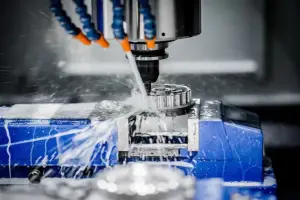
Rough milling to remove bulk material
Semi-finish and finish milling of critical features
Inspection (CMM, roundness, surface finish)
Surface treatment or coating if required
Prototypes and small batches
For prototypes and low volumes, the housing is often machined entirely from solid aluminum billet or plate. This route avoids tooling cost, allows rapid design changes, and delivers the highest geometric accuracy. Cycle times are longer, but lead times are short and process control is straightforward.
Mass production
At higher volumes, the blank is usually a die casting or extrusion. CNC milling then finishes the critical surfaces-stator bore, bearing seats, sealing faces, and mounting features-to the required tolerances. The casting provides near-net shape and complex internal features; milling guarantees the precision that casting alone cannot hold.
Best Materials for Motor Housings
Aluminum dominates because it combines low weight, good thermal conductivity, and reasonable machinability.
|
Material |
Typical Use |
Key Advantages |
Trade-offs |
|
6061-T6 / 6082-T6 |
Prototypes, low-to-medium volume, precision housings |
Excellent machinability, good conductivity, stable dimensions |
Higher material cost than cast alloys |
|
A356-T6 (cast) |
Medium-to-high volume structural housings |
Good castability, decent strength after heat treatment |
Lower conductivity than wrought alloys, possible porosity |
|
Other cast alloys (e.g., ADC12 / A380) |
High-volume die-cast housings |
Low cost at scale, complex thin walls possible |
More machining allowance often needed, thermal performance lower |
Aluminum Motor Housing Machining from 6061 or 6082 is common when tight concentricity and surface finish are critical. Cast alloys are preferred when geometry complexity and annual volume justify the tooling investment.
The Tricky Features and How Milling Handles Them
Common challenging features include:
Thin walls that distort under cutting forces
Internal cooling channels or jackets that must remain leak-free
Bearing seats that require tight diameter, roundness, and concentricity
Sealing faces that need flatness and specific surface finish
Precise mounting hole patterns and flange locations
3-axis or 5-axis?
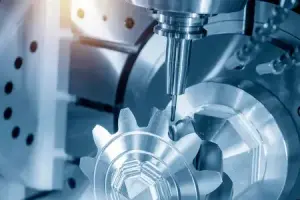
Many housings can be completed on 3- or 4-axis machines with good fixturing. When the design includes compound angles, deep internal features, or the need to machine both ends and the periphery in fewer setups, 5-axis becomes advantageous. Single-setup machining reduces stack-up error and often improves concentricity between the stator bore and bearing seats. The decision depends on geometry, tolerance stack, and production volume.
CNC Milling for EV Motor Housing work succeeds or fails on these details. Getting the fixture strategy and toolpath sequence right early saves multiple iteration cycles later.
Typical Failure Pattern vs. Controlled Process
A common pattern looks like this. A customer needs a prototype aluminum housing with tight bearing-seat concentricity and an integrated cooling jacket. Early attempts using multiple setups produce out-of-round seats and distortion on thin sections. Leak testing fails on the first articles.
A revised approach uses a more rigid fixture strategy, optimized roughing and finishing sequences, and in-process probing. Critical bores are finished in a single setup where possible. The next articles meet the concentricity and roundness targets, pass leak testing, and allow the motor to run without rotor rub. Later small-batch runs reuse the same process discipline, improving consistency. The difference is rarely the machine itself-it is process control and early attention to the highest-risk features.
How to Choose an EV Motor Housing Manufacturer
When selecting an EV Motor Housing Manufacturer, check these points:
Machine capability and inspection equipment (CMM, roundness testers, surface-finish instruments).
Evidence of similar work-stator bores, bearing seats, cooling features.
Ability to maintain consistency from prototype into small-batch or wholesale EV motor housing parts.
Communication speed and willingness to provide DFM feedback.
Realistic lead times that include material availability and inspection.
What to send with your RFQ
Include the 3D model, 2D drawing with critical tolerances highlighted, material specification, annual or batch quantity, surface-finish and coating requirements, and any leak-test or cleanliness standards. Clear data produces faster, more accurate quotes.
A capable CNC machining factory for motor housings can support both prototypes and bulk motor housing machining. Look for partners that treat process control and documentation as part of the deliverable, not an afterthought. As EV production volumes continue to grow, suppliers already operating under disciplined systems are better positioned to meet rising quality expectations.
FAQ
Q: How are EV motor housings made?
A: Most start as aluminum billet, extrusion, or casting. CNC milling then finishes the critical geometric features-stator bore, bearing seats, sealing faces, and mounting points-to the required tolerances. Prototypes are often fully machined from solid; higher volumes use near-net-shape blanks plus precision milling.
Q: What material is best for an EV motor housing?
A: 6061-T6 or 6082-T6 aluminum is widely used for prototypes and precision applications because of its machinability and thermal conductivity. Cast alloys such as A356 are common for higher volumes where complex geometry and cost matter more.
Q: Is CNC milling better than casting for motor housings?
A: Neither is universally better. Casting (especially high-pressure die casting) is efficient for complex shapes at high volume. CNC milling is essential for the precision surfaces that casting cannot hold tightly enough. Many production housings combine both.
Q: What tolerances can CNC milling hold on motor housings?
A: Critical features such as bearing seats and stator-bore concentricity are commonly held to 0.01 mm or tighter on well-controlled processes. Exact capability depends on part size, geometry, fixturing, and machine condition.
Q: Can you handle both prototypes and bulk orders?
A: Yes. A well-equipped shop can machine prototype housings from billet and later process cast or extruded blanks for small-to-medium production runs, provided the quality system, inspection capability, and process documentation scale with the volume.
Ready to Discuss Your Motor Housing?
Send the model, drawing, material preference, and quantity. A practical review will highlight the highest-risk features and provide a realistic quote for CNC Milling for EV Motor Housing work-whether you need a few prototypes or are planning Custom Motor Housing CNC Service for ongoing supply. Clear data produces clearer answers.