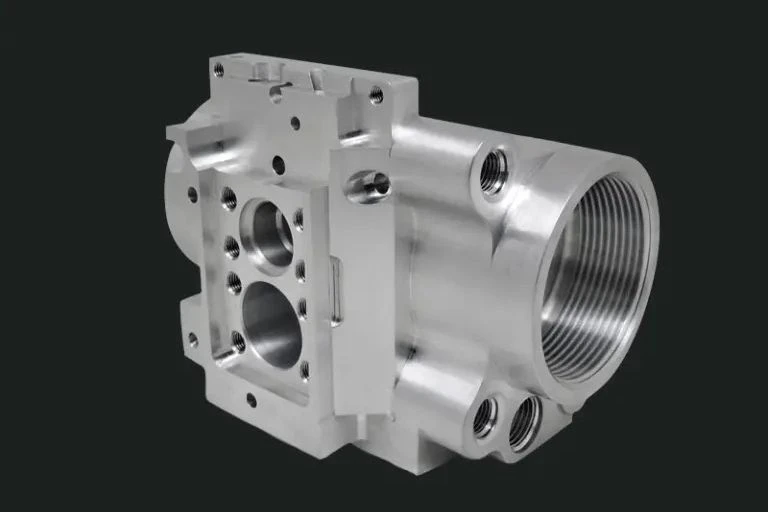
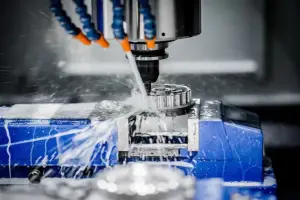


Procurement teams run into the same problem again and again. Die casting looks cheap once the mold is paid off, but the tooling bill often lands between $15,000 and $40,000, and the first good parts can take two to three months. CNC milling skips the mold and can ship parts in a week or two, yet the piece price stays higher if volumes climb into the tens of thousands. Pick the wrong process and you either burn cash on a mold you never fully use or overpay on machining for years.
Here's a clear look at how aluminum CNC milling and die casting actually compare so you can match the process to real volume, geometry, and timeline.
Side-by-Side Process Comparison
|
Factor |
Aluminum CNC Milling |
Aluminum Die Casting |
|
Tooling / Setup Cost |
Low (mainly fixtures) |
High ($8,000–$50,000+ for the mold) |
|
Per-Part Cost (low volume) |
Higher |
Still high until the mold is paid off |
|
Per-Part Cost (high volume) |
Moderate to high |
Lowest once volume justifies the tooling |
|
First-Part Lead Time |
3–12 days |
6–14 weeks |
|
Typical Accuracy |
Excellent (±0.025–0.05 mm common) |
Good (±0.1–0.25 mm, mold-dependent) |
|
Design Freedom |
High (complex 3D, undercuts, thin walls) |
Limited by draft, parting lines, ejector pins |
|
Best Volume Range |
1 to a few thousand pieces |
Usually 5,000+ |
|
Alloy Choices |
Wide range of wrought alloys and tempers |
Mostly casting alloys |
|
Surface Finish |
Clean as-machined, easy to improve |
Acceptable, often needs secondary work |
|
Design Changes |
Fast and cheap |
Slow and expensive |
Die casting wins on pure unit cost at high volume. CNC wins on speed, flexibility, and total project cost when volumes stay modest or the part is complicated.
When CNC Milling Is Usually the Better Call
Three situations make aluminum CNC milling the clearer choice.
Volumes that never reach mold payback.
Many projects forecast high numbers and then settle much lower. If you only need a few hundred or a couple of thousand parts, the mold cost rarely makes sense. CNC lets you order what you actually need without a big upfront hit.
Geometry that fights the mold.
Deep pockets, thin ribs, internal undercuts, or uneven wall thickness are expensive or impossible in standard die casting. CNC cuts these features directly. Secondary machining after casting often eats up the cost advantage anyway.
Speed and the need to change direction.
When the design is still moving or the launch window is tight, waiting months for tooling is painful. Most teams use aluminum CNC milling services for prototypes, bridge production, and early sales while they wait for real market data.
You also get access to stronger wrought alloys such as 6061-T6 and 7075-T6, better material consistency, and simpler traceability-points that matter in medical, robotics, and aerospace work.
Case Study: The Mold That Never Paid for Itself
A medical device startup planned to die-cast an aluminum housing. The mold quote was $27,500 with a 11-week lead time. They expected 7,000–8,000 units a year. Two geometry changes came in from clinical feedback before the first production order. Revising the mold would have cost another $8,000 and pushed the schedule out six more weeks.
They stopped and ran a 350-piece CNC pilot instead. The parts met every dimensional and surface callout. Total spend on the pilot was less than the mold deposit. After eight months of real orders, annual volume settled around 2,800 units-well below the original forecast. Sticking with CNC kept cash available and avoided a mold that would have sat underutilized. They still order from the same shop today and make small design tweaks without drama.
We've seen this exact pattern more than once: optimistic forecasts meet actual demand, and the flexible process wins.
Simple Decision Checklist
Ask these four questions before you commit:
Will annual volume reliably stay above 5,000–8,000 pieces?
Is the geometry simple enough for a mold without heavy secondary machining?
Can you afford 8–14 weeks before the first production parts?
How likely are design changes in the next 12 months?
If the answers lean toward lower volume, complex shapes, tight timelines, or frequent changes, CNC is usually the lower-risk path.
Why Work With a Specialist CNC Partner
Not every shop is set up to run aluminum efficiently at both prototype and production quantities. The difference shows up in smart fixturing, tooling libraries built for aluminum, and honest quoting that doesn't push you into the wrong process.
When your project needs speed, design freedom, or volumes that don't yet justify a mold, aluminum cnc milling services from a focused custom aluminum cnc milling manufacturer can remove the tooling gamble while still delivering production-ready parts. The same partner should also support aluminum cnc milling factory wholesale quantities later, so you don't have to switch suppliers when numbers grow.
FAQ
Q: Is CNC always more expensive than die casting?
A: No. At low and medium volumes the total cost is often lower with CNC because you skip the large tooling bill and the risk of design changes. Only at higher sustained volumes does die casting pull ahead on pure piece price.
Q: Can CNC parts be as strong as die-cast ones?
A: Yes-and often stronger. CNC uses wrought alloys like 6061 and 7075 that typically outperform common casting alloys in strength and consistency.
Q: What volume range works well for aluminum CNC milling?
A: Most shops handle everything from single prototypes to several thousand pieces efficiently. Beyond that, a hybrid approach or a move to casting becomes worth checking.
Q: How fast can I get parts?
A: First articles commonly ship in under two weeks. Repeat orders move even faster once programs and fixtures are proven.
Q: Should I start with CNC and switch to die casting later?
A: Yes. Validate the design and real demand with CNC first, then invest in tooling only when volume and design stability clearly justify it.