

Picking the wrong aluminum alloy for CNC work is expensive. One robotics team insisted on 7075 for every bracket because "stronger is always better." Material costs jumped 60 percent, tool wear spiked, and the finished parts still had more strength than the design needed. A marine equipment maker went the other way, stayed with 6061 for saltwater housings, and later dealt with corrosion complaints in the field. In both cases the machine shop did its job. The problem started with the grade choice.
Aluminum CNC milling services give you tight tolerances and clean surfaces, but only when the alloy actually matches the job. This guide compares the three grades shops see most often-6061, 7075, and 5052-shows how they machine differently, and gives a practical way to decide.
6061 vs 7075 vs 5052: Quick Performance Snapshot
|
Property |
5052-H32 |
6061-T6/T651 |
7075-T6/T651 |
|
Ultimate Tensile Strength |
~228 MPa |
~310 MPa |
~572 MPa |
|
Yield Strength |
~193 MPa |
~276 MPa |
~503 MPa |
|
Brinell Hardness |
~60 HB |
~95 HB |
~150 HB |
|
Density |
2.68 g/cm³ |
2.70 g/cm³ |
2.81 g/cm³ |
|
Elongation |
12–20% |
8–12% |
5–11% |
|
Corrosion Resistance |
Excellent |
Good |
Fair |
|
Weldability |
Excellent |
Good |
Poor |
|
Machinability |
Fair |
Excellent |
Very Good |
|
Relative Material Cost |
Low |
Medium |
High (1.5–2.5×) |
|
Best Fit |
Marine panels, formed covers |
Most brackets, housings, fixtures |
High-load aerospace-style parts |
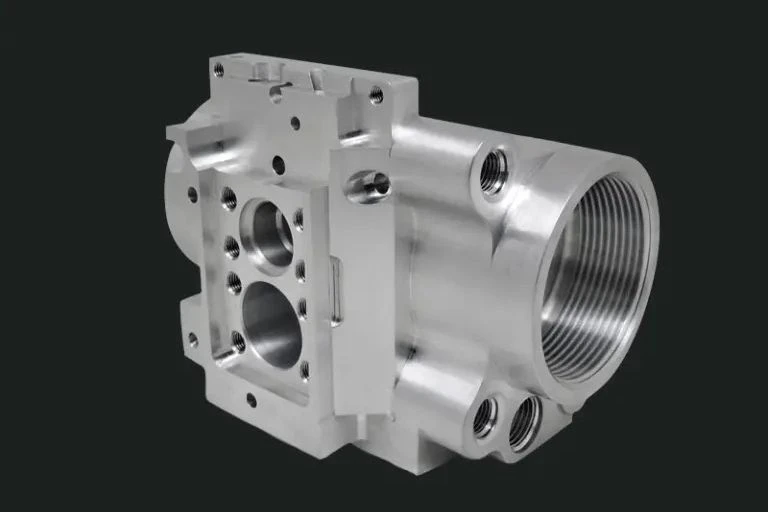
6061 is still the workhorse for the majority of precision aluminum milling parts. It balances strength, corrosion resistance, and ease of machining without blowing the budget. 7075 is the right call when you truly need that extra strength-to-weight. 5052 wins on corrosion and formability, but it is softer and gummier under the cutter.
How the Alloy Changes the Machining Process
The numbers on the data sheet show up directly on the shop floor.
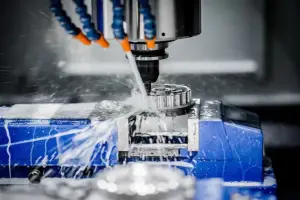
6061 cuts clean. Chips break nicely, cutting forces stay moderate, and tool life is long when you use sharp 2- or 3-flute carbide tools with a high helix. You can push surface speeds higher and keep good finishes without fighting the material.
7075 is harder. Forces go up, tool wear increases 25–40 percent in most shops, and you usually drop speeds 10–20 percent. The upside is better dimensional stability and often a cleaner surface because the material resists smearing. Stress-relieved plate (T651) helps a lot on thin walls or heavy stock removal.
5052 is the sticky one. Long stringy chips, more built-up edge, and spring-back on thin sections make tight tolerances harder. Chip evacuation becomes the main battle. It works fine for simpler shapes, especially when the part also needs bending or welding later.
Shops that run a lot of aluminum CNC milling services keep separate parameter sets for each grade for a reason. Treating them the same costs time and tools.
Case Study: A Bracket That Didn't Need 7075
An automation company sent over a complex mounting bracket. The drawing called for 7075-T6. Loads were moderate, the environment was indoor, and the part needed anodizing plus several precision holes and thin ribs.
We ran the numbers. 6061-T651 met the strength and fatigue requirements with a solid safety margin. The customer was skeptical at first-they had standardized on 7075 for everything "just in case." After a quick load review and a short prototype run, they switched.
Results were straightforward:
Material cost dropped about 40 percent.
Cycle time improved roughly 20 percent because we could run faster feeds and speeds.
Tooling cost per part fell.
Anodizing color came out more consistent.
Total part cost came down more than 25 percent.
There was a small hiccup on the first batch with residual stress in the original plate stock, fixed by moving to proper T651 material. Nothing dramatic, just the usual shop reality. The final parts performed exactly as needed. This kind of over-specification happens more often than most engineers admit.
Industry Trends Worth Watching
Demand for precision aluminum milling parts keeps rising in robotics, medical devices, EVs, and aerospace. Buyers now expect full material traceability, stress-relieved plate when geometry is critical, and consistent anodizing response. Most serious shops follow ASTM or AMS material standards and keep process records that survive customer audits.
Supply-chain pressure also matters. 6061 is widely available and usually less volatile on price. 7075 can face longer lead times and bigger cost swings, especially in thicker plate. Sustainability conversations are growing too-faster-machining grades generate less scrap and lower energy use per part. Working with an aluminum CNC milling services partner that stocks multiple tempers and can flag availability issues early saves headaches later.
FAQ
Q: Which aluminum is best for most CNC milling jobs?
A: 6061-T6 or T651. It covers the majority of precision aluminum milling parts with the best mix of performance, cost, and machinability.
Q: When does 7075 make sense over 6061?
A: When the design truly needs strength beyond what 6061 can deliver, when fatigue under high cyclic loads is critical, or when thin-wall stiffness must be maximized without adding weight. Expect higher material and machining costs.
Q: Can I use 5052 for complex CNC parts?
A: For simpler geometries or parts that also need forming and excellent corrosion resistance, yes. For intricate 3-axis or 5-axis work with tight tolerances, 6061 or 7075 is usually the better choice.
Q: How much does the alloy choice affect the final price of aluminum CNC milling services?
A: Material difference plus changes in cycle time and tool wear often shift total cost by 20–50 percent. Getting the grade right early avoids expensive redesigns.
Q: Do I always need stress-relieved plate?
A: For thick sections, heavy material removal, or thin-walled parts where flatness matters, yes. Specify T651 (or equivalent). The small premium is usually worth it.