
Material Grade Selection
Choosing the appropriate aluminum alloy is the key to the performance of aluminum CNC machined parts. We recommend the best materials to our customers based on strength, weight, corrosion resistance, and processability. The following is a comparison table of commonly used aluminum alloys (suitable for Featured Snippets):
|
Aluminum Alloy |
Temper |
Key Characteristics |
Machinability |
Typical Applications |
Recommended For |
|
6061-T6/T651 |
T6 |
Good strength, excellent corrosion resistance, weldable |
Excellent |
Structural frames, brackets, robotic parts |
General precision aluminum CNC machining parts |
|
7075-T6/T651 |
T6 |
High strength, excellent fatigue resistance |
Good |
Aerospace components, automotive racing parts |
High-strength lightweight aluminum CNC components |
|
5083-H111/H116 |
H111 |
Superior corrosion resistance (especially in seawater) |
Moderate |
Marine equipment, shipbuilding, armored vehicles |
Corrosion-resistant aluminum CNC machining parts |
|
2024-T3/T351 |
T3 |
High strength, heat-treatable |
Good |
Aircraft structures, precision gears |
High-load applications |
|
6082-T6 |
T6 |
Similar to 6061 but higher strength |
Excellent |
Architectural, transportation structures |
European standard projects |
|
5052-H32 |
H32 |
Excellent formability and corrosion resistance |
Good |
Enclosures, panels, bent parts |
Parts requiring bending |
6061 aluminum alloy CNC machining is the most popular choice due to its balanced performance and economy; 7075 aluminum alloy is suitable for lightweight scenarios that require extremely high strength. We will provide professional material recommendations based on your functional requirements and budget to ensure that aluminum alloy CNC machined parts achieve the best cost-effectiveness.
Machining Capabilities
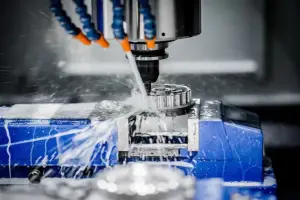
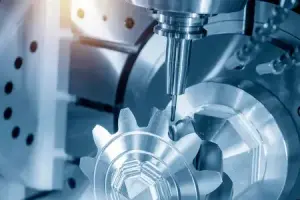
Our aluminum CNC machining parts rely on internationally leading equipment, including Haas, Mazak, and DMG Mori high-precision CNC centers. The center can be as follows:
Maximum processing size: diameter Φ 800mm × length 1500mm
01
Number of axes required: 3-axis, 4-axis, 5-axis linkage and combination of turning and milling
02
Tolerance control: standard ± 0.01mm, high-precision up to ± 0.005mm (even tighter)
03
Batch divergence: Process capability index Cpk ≥ 1.67, 100% full inspection by CMM coordinate measuring instrument
04
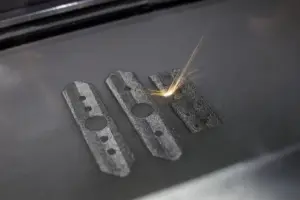
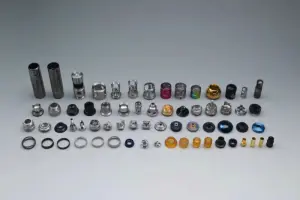
We specialize in complex surfaces, thin-walled structures, and high-precision hole machining, while using high-speed cutting and sufficient cooling fluid to reduce thermal deformation. We can provide stable and diverse processing quality for both simple brackets and complex lightweight aluminum CNC components, meeting the high demands of the aerospace and automotive industries.
Lightweight Design Capabilities
Lightweight is the central trend of modern manufacturing industry. We have extensive experience in the design of lightweight aluminum CNC components. Through wall thickness optimization, topology design, and honeycomb weight reduction, we have achieved significant weight reduction without sacrificing strength.
Practical case:
Aerospace bracket:
reduces weight by 35%, maintains strength of over 95%
Car battery casing:
reduces weight by 28%, improves range
Electronic device heat sink:
optimizing heat dissipation structure while reducing weight by 20%
Our engineering team intervened during the DFM phase, using professional software to simulate stress and weight distribution and provide optimization proposals. By choosing us, you will obtain truly high-performance precision aluminum alloy CNC parts, helping your products to be ahead in terms of weight, performance, and cost.
Surface Defect Control
Aluminum alloy has a relatively soft texture and is prone to defects such as burrs, scratches, and oxidation spots during processing. We adopt multiple measures to strictly control the appearance quality of aluminum CNC machined parts, ensuring that the Ra value remains stable between 0.4-3.2 μ m.
Common wrist controls:
- Optimize tool path and cutting parameters to reduce vibration and chip buildup
- Using sharp coated cutting tools and high-pressure coolant
- Secondary precision machining or deburring process
The options for exterior treatment include:
- Anodizing (Type II/III): enhances corrosion resistance and aesthetics (MIL-A-8625 specification)
- Sandblasting/Pearl Sand: Average Matte Effect
- Chemical polishing/powder coating: high gloss or protective layer
The following is a typical surface roughness data table:
|
Machining / Treatment Method |
Typical Ra Value (μm) |
Appearance Effect |
Recommended Applications |
|
Standard CNC Precision Machining |
1.6 – 3.2 |
Slight tool marks visible |
Functional structural parts |
|
High-Precision Finishing |
0.8 – 1.6 |
Smooth and uniform |
Sealing surfaces, mating parts |
|
Mirror Polishing |
0.2 – 0.4 |
High-gloss mirror finish |
Optical or cosmetic components |
|
After Anodizing |
0.8 – 2.0 |
Colored and corrosion-resistant |
Aerospace and automotive exposed parts |
Through these controls, our aluminum alloy CNC machined parts can achieve near zero defect delivery, meeting high appearance and functional requirements.
FAQ
Hot Tags: aluminum CNC machining parts, China aluminum CNC machining parts manufacturers, suppliers, factory, Aluminum CNC Machining Parts, Aluminum Turning Services, CNC Lathe Parts, cnc turning services, Precision CNC Turning, Stainless Steel Turned Parts